Once again, after watching an episode of this programme on separation anxiety, I feel compelled to write a review because it was just an awful, misleading watch with a plethora of incorrect information and a lack of understanding and knowledge shining through. If you haven’t already read my previous reviews on a couple of his other separation anxiety episodes, they’re also worth a read!
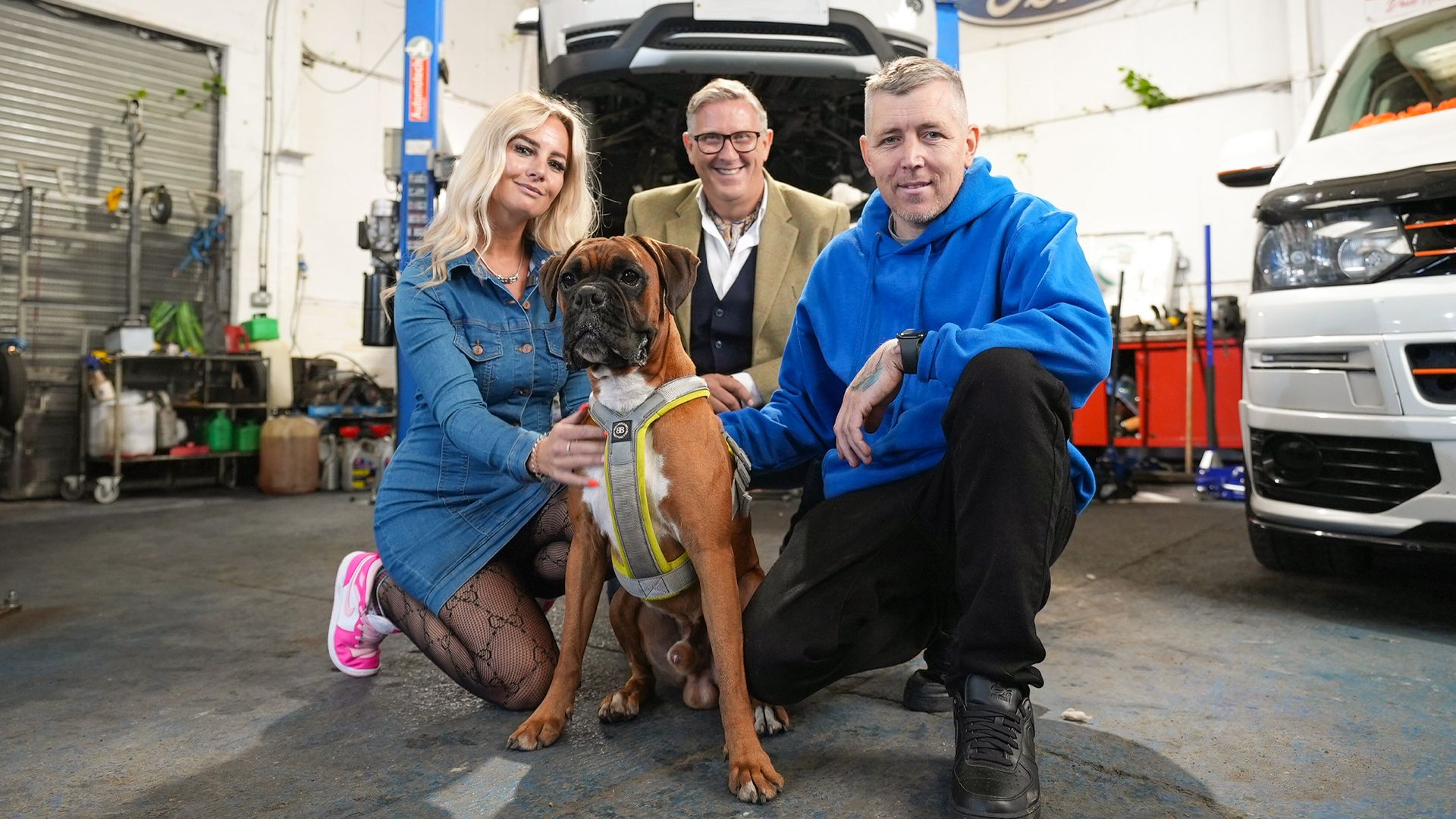
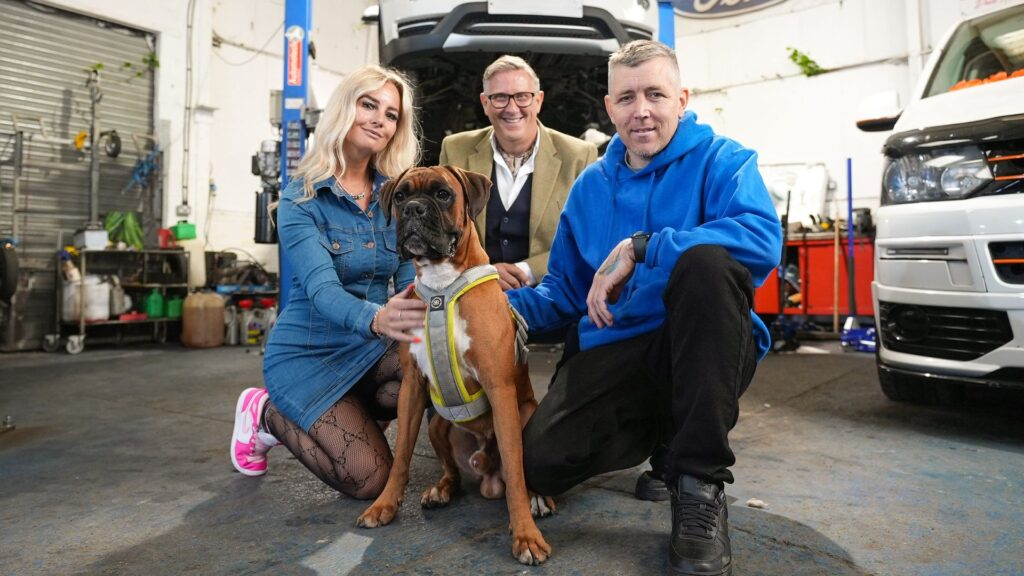
Dre is a young Boxer (we are not told how old he is which is a shame but he looks about 7 – 9 months or so possibly). There are several concerns the owners have with Dre – he constantly barks and wont settle, wont settle outside the house so is distracting at the husband’s work, and he becomes destructive and anxious when left alone. So the latter aspect is what Graeme starts with and it has left me with multiple issues I wish to address because there are so many concerns I have with this episode and how the behaviour is addressed, but also how separation anxiety is being portrayed to the world.
It is not “real life”
We are shown videos of Dre when he has been left alone, and he is leaping at the closed door, he is jumping at the gas hob, barking and removing the knobs from the hob (he has previously turned the gas on while alone), and he has completely ripped up the sofa when he has been alone. The owners also tell us that Dre has also got hold of a kitchen knife when alone, and pulled down a candle in a jar and cut his paw pad when home alone. When Graeme is in the house we see Dre constantly barking at him, jumping at him and displaying a huge amount of stress signs and behaviours which indicate anxiety (shake offs, pacing up and down the living room, panting, barking, tail wagging – remember a wagging tail does not always equal a happy dog!), but none of these are mentioned at all. In fact it concerns me as to whether Graeme even notices these signs to be honest, as they are a really important indicator into how Dre is feeling and giving us a lot more relevant information, and it is likely that all the behaviours are intertwined, but Graeme keeps them as distinctly separate.
At no point is there any mention of body language, of stress signs, of what ‘threshold’ means and why it is vital to keep Dre well under threshold when working on a separation anxiety protocol. The insinuation is that all we want to do is stop Dre destroying things, so Graeme opts to shut him in a tiny hallway rather than truly address the underlying emotions motivating the destruction.
A clear lack of knowledge and understanding
It is very common for dogs to become destructive when left home alone if they feel anxious or panicked, in fact I have known several people whose dogs have, in the past, managed to turn the oven on or similar . In fact the most commonly reported signs of separation anxiety are vocalising, toileting in the house when alone, and destruction. But Graeme seemed shocked and said that he had never had anyone say they cannot leave their dog alone because there is a genuine danger he might blow up the house. For a professional working with separation anxiety day in and day out, like myself, the fact that Dre is engaging in these behaviours does not surprise me. It makes me sad, absolutely, but what makes me more sad is to hear someone on tv clearly showing he does not understand separation related behaviours at all. Separation anxiety is akin to a panic disorder in humans.
Panic, according to the Cambridge English Dictionary is defined as:- “a sudden strong feeling of fear that prevents reasonable thought and action”, with the Brittanica Dictionary defining it as “a state or feeling of extreme fear that makes someone unable to act or think normally”. Yet time and time again anxiety, fear and panic in dogs is diminished.
Graeme states that he believes that the issues are stemming from the fact that Dre sees the house as an “amusement park and is overwhelmed by all that is on offer”. Now yes – we do need to ascertain that if a dog is engaging in certain behaviours when alone, that it is not simply a way of entertaining themselves or relieving boredom. However, this is where understanding body language and behaviour comes in, because a dog’s body language in these scenarios will answer the question for us. In the videos we see of Dre jumping at the hob, barking and dismantling the hob rings, we also see tension round the eyes, high pitched barking, panting, and his behaviour is urgent – all indicating there is anxiety underlying the behaviours. In a video we see where Dre is alone and is jumping with all fours off the floor at the closed door, we also see the door paintwork scratched off, and see an urgency to Dre’s behaviour that is not just “amusing himself”
So what is Graeme’s solution? To shut Dre in the small hallway, creating a narrow area using a puppy pen, in which he placed a water bowl and a thin blanket for him to lie on. Why? His reasoning was because he believed they need to make the environment boring because currently Graeme stated Dre was like ” a kid in a sweet shop”.
Using distraction (and luck!) not desensitisation
Not only is Graeme completely ignoring the body language and behaviour which Dre is using to communicate how anxious he is, but there is also seemingly no discussion about other areas of Dre’s life, no questions regarding exercise and enrichment, no discussions to ascertain other variables that could be impacting his life. No – Dre is just closed in a tiny hallway with a small Kong with a bit of peanut butter in. The reasoning is the Kong should help him relax, and “with a bit of luck, should give him something to engage his brain”. In no situation should any professional addressing separation anxiety (or any other behaviour concern) be relying on “luck”!
In all other areas of training and behaviour work, using well timed food rewards (no – it is not bribery) to create alternative emotional responses and associations (bearing in mind all behaviour is driven by how the dog feels) and therefore modify behaviour works so well! But – not with separation anxiety. Why? Firstly, if a dog is anxious they may well not eat, in which case it is a waste of time. Secondly, often dogs who are anxious about being home alone WILL eat a food toy, but as soon as that food is finished they become more anxious – and this can give us a false read where we think our dog is “fine” for the length of time they are eating that food, but actually if we look closely we can usually see signs of anxiety while they are eating, and this only delays the onset of panic. Thirdly, giving a dog a food toy before you leave also serves to become a predictor to that dog of “oh no – my person is leaving” meaning they become anxious before you have even less. None of these considerations enter into Graeme’s mind, or if they do, he certainly doesn’t mention them.
Guesswork and (once again) outdated, incorrect information
When they left the house initially they did at least set a camera up to watch Dre live, they then walked outside and Graeme said they would leave him for 20 seconds and then “if he’s a good boy we will go back in”. Now let’s give Graeme some credit here, because he did start out with a supposedly short duration, BUT for most dogs I work with, 20 seconds to start with is far too long. We need to be watching the dog for when they show signs of slight anxiety/tension/stress, and ensuring our absences are kept UNDER this point, rather than guessing the amount of time we leave them and hoping for the best. This is how they will be able to gradually learn that being alone is safe.
And let’s look at Graeme’s comment about going back in if hes been a “good boy”. First of all, the words “good ” and “bad” have no place here. A dog who is struggling with their emotions is NOT, and should not be seen as, a “bad dog”. Are humans who are struggling with anxiety issues or other mental health issues seen as “bad”? No, of course not. And if we go by what Graeme says, if Dre had started barking or jumping at the door (something Graeme has termed “bad”) they would potentially not go back in, thereby actually reinforcing the association Dre has of being alone as being scary. This initial absence should be about information gathering.
It is widely known that emotions cannot be reinforced in the way behaviours can be reinforced (Rise VanFleet, 2011), so this is once again, out of date information that has been proven to be incorrect time and time again.
I should add as well that during this initial absence, where they watched him on a camera and stated he seemed “calm”, Dre was standing at the end of the hallway looking through the pen with tense body language, and when they came back in he was panting heavily, with a lot of tension around his eyes and forehead.
They then left Dre again and during this time Dre was standing in the hallway, panting heavily and staring at the pen door looking tense, but Graeme said “so far, so good”! Dre then came closer to the pen, heavily panting with clear tension around the eyes, but Graeme must not have noticed these very clear signs that Dre was very stressed because he said “I’m gonna push for a minute…I think thats about all right”. He “thinks” Once again, guesswork should not be part of this!
While outside for a minute, with them saying how calm Dre was, it cut to a video of Dre who, while he was not destroying anything or barking (there was nothing to destroy and he looked exhausted – I will come onto that later!), he was very much not calm. He was standing with tense body language, panting heavily with a very pink tongue, and there was a lot of tension round his eyes. He was not calm. He was just about coping.
Lack of knowledge and understanding continues….
At this point the narrator states “the key is to praise Dre’s calm behaviour before he kicks off so he learns there are benefits to being on his best behaviour”. Once again we have reference to a dog “kicking off” and if a dog isnt comfortable being home alone that isnt their “best behaviour”, totally ignoring the many, many underlying motivators for separation anxiety. A dog who is anxious home alone is not intentionally trying to annoy their humans…..they’re just struggling. I wish as a whole the human race understood that and addressed such issues in the way we do with humans, rather than expecting dogs to just ‘suck it up’ – which incidentally they cant, because if any of you have ever experienced anxiety or panic, you will know you have no control over it.
After that 1 minute absence, they come back in and the stressed panting continues, plus you can see Dre has a very, very dry mouth.
They then leave again, and the narrator states “with each attempt Graeme gradually increases the length of time Dre is left alone” which also coincides with the viewers being shown a video of Dre pacing up and down the hall whining – so his behaviour has escalated. Now for someone like me who works with separation anxiety exclusively, this would have been enough for me to have come back in (although I must add I would never have approached it in this way in the first place!). Also, we never want to constantly increase the length of time a dog is left alone, even if they are super relaxed, because by doing so the dog can recognise a pattern whereby they learn every time you go out, you will be gone longer than before, and this can result in regressions. We want and need regular ‘easy wins#.
But Graeme left it, and then we are told there is a “subtle but significant breakthrough” because Dre has sat at the end of the hallway. But – sitting doesnt always mean relaxed!! Bear in mind (and I will mention this at the end) this filming session is likely to have gone on for many hours, and Dre is most likely very tired. When we see him sitting at the end of the hall, he is not relaxed at all – he is alert, panting and we see him shifting his weight on his front legs. All of those are signs he is not comfortable at all.
As a side note I would want to further assess his posture and gait to rule out pain, because in shots of him sitting there were potential signs he was adapting his posture which could be due to trying to make himself feel more comfortable, but we cannot make judgements on that from one image.
In response to Dre sitting, Graeme then says that “we are changing the way his brain works…..quiet equals good”. I wont reiterate what I have previously said, but I work with a LOT of dogs who are “quiet” when home alone but show their anxiety and lack of feelings of safety in other ways. We can never assume just because a dog is quiet that they are comfortable…in fact with Dre we can clearly see he is NOT comfortable due to the multiple other signs of stress!
The comment that did it for me
The narrator then tells us that “with their boxer calm and content on his bed, Graeme is eager for the couple to push Dre’s patience to the limit” and he suggested they walk to the local shop, which is a 10 minute walk away. So we are going from 1 minute to 20 minutes minimum, and as this comment is made, we are taken to a shot of Dre whining and jumping at the door.
There is so much that I find concerning about this comment that I am unsure where to start.
First of all, Dre was never “calm and content on his bed” – he was tensely sitting on his blanket at the end of the hall, panting, showing clear signs of stress on his face, intermittently pacing up and down the hall whining.
Secondly, this is NOT the way to address separation anxiety. It is never about “pushing” a dog – ever. Pushing a dog to be alone for longer and longer periods of time, as I have already mentioned, is not ethical nor will it work – remember what we are aiming for is to teach a dog being alone is SAFE, not push and hope for the best that a dog will tolerate it. We always want a dog to be relaxed during absences, and at most feel slightly “itchy” – but if a dog is showing as much tension and anxiety as Dre is in these videos, it is way too much!
When they got to the shop and checked in on Dre on the camera, Dre is sitting tensely again at the end of the hallway, shifting his weight on his front legs again – looking stressed. But the female owner states “he’s literally just sat on his bed just chilling”. The photo below is what is termed “chilling”. Yes this shot happens to not have him panting, but he is most definitely not relaxed:
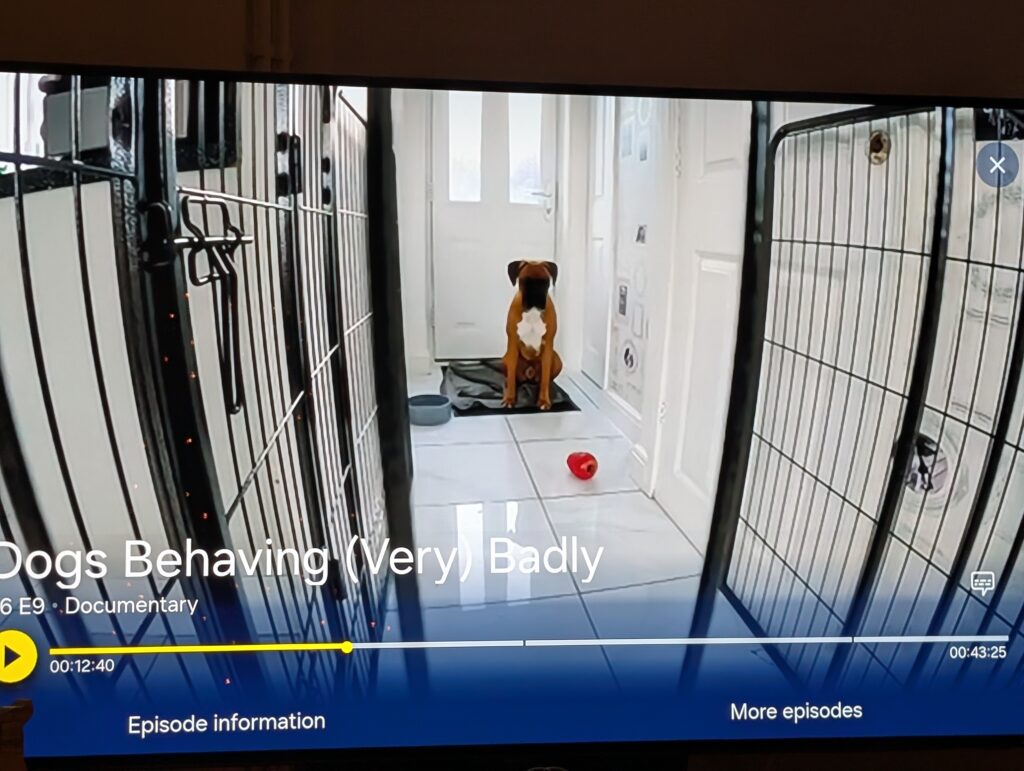
Now dont get me wrong – I am in no way judging or shaming the female owner for that previous comment. They have come to Graeme to get help with Dre because he is supposedly a professional. This would have been a perfect opportunity for Graeme to have educated them on Dre’s body language, what to look out for, what body language indicates his is anxious – something I do with all my clients. But the fact he does not, and also seemingly agrees that this image is a dog “chilling” on his bed, concerns me greatly.
Additionally, lets remind you again about the presence of Graeme and the camera crew….meaning that the conditions are so far removed from “real life” and there is the question of whether Dre is actually fully alone.
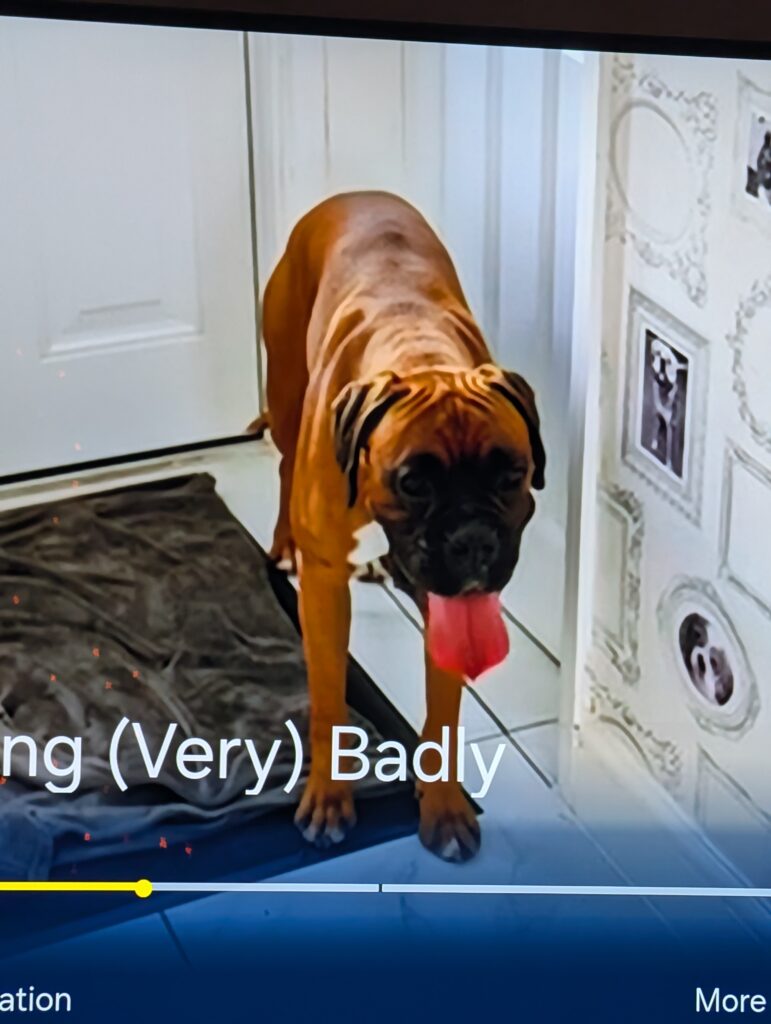
When they came back in, Dre was standing panting at the end of the hall, a very pink tongue, extreme tension around the eyes and forehead and he looked absolutely exhausted, but Graeme was pleased. See the photo below (apologies for the quality – its a shot of the tv as I was watching it!):
Long day = an exhausted (not a relaxed) dog
It is highly likely that Dre WAS absolutely exhausted because of having a long day of filming and they absolutely would have left him alone more times than we are shown on the programme- and that also may well be the reason he isnt, as the narrator termed it, “kicking off”. Is that the same as being relaxed and feeling safe home alone? Absolutely not!
When Graeme was talking to the owners early on in the programme it was sunny, obviously early in the day. At the end of the programme Graeme says how pleased he is with “the day’s training”, and when we see him drive off the light is low and it is obviously early evening. That is a long day of filming. Dre looks exhausted. And if a dog is that tired, it is likely that his reactions to being alone are diminished. I can still see he is clearly feeling anxious.
Tv editing is misleading